IMPORTANT: In order to prevent damage to golf carts, proper loading is necessary. Below are instructions on how to load golf carts properly.
Transporting golf carts on a flatbed trailer requires careful securing to prevent damage to the cart, trailer, or other vehicles. Improper tying can lead to shifting, tipping, or accidents. This guide provides step-by-step instructions based on best practices to ensure safe transport.
Materials Needed
- At least four high-quality ratchet straps rated for heavy-duty use (minimum 2-inch width, 5,000 lb working load limit).
- Wheel chocks or blocks for added stability.
- Safety chains as a secondary securement.
- Protective padding to prevent strap abrasion on the golf cart frame.
Always use straps designed for vehicle transport to avoid failure during travel.
Preparation Before Loading
- Prepare the golf cart: Engage the parking brake, remove loose items, fold down the windshield if applicable, and ensure the cart is in neutral or park.
Loading the Golf Cart
- Drive or winch the golf cart onto the flatbed trailer slowly, centering it lengthwise and widthwise to distribute weight evenly. Once positioned, re-engage the parking brake.
- Place wheel chocks in front of and behind the wheels if available to prevent initial rolling.
Securing the Golf Cart
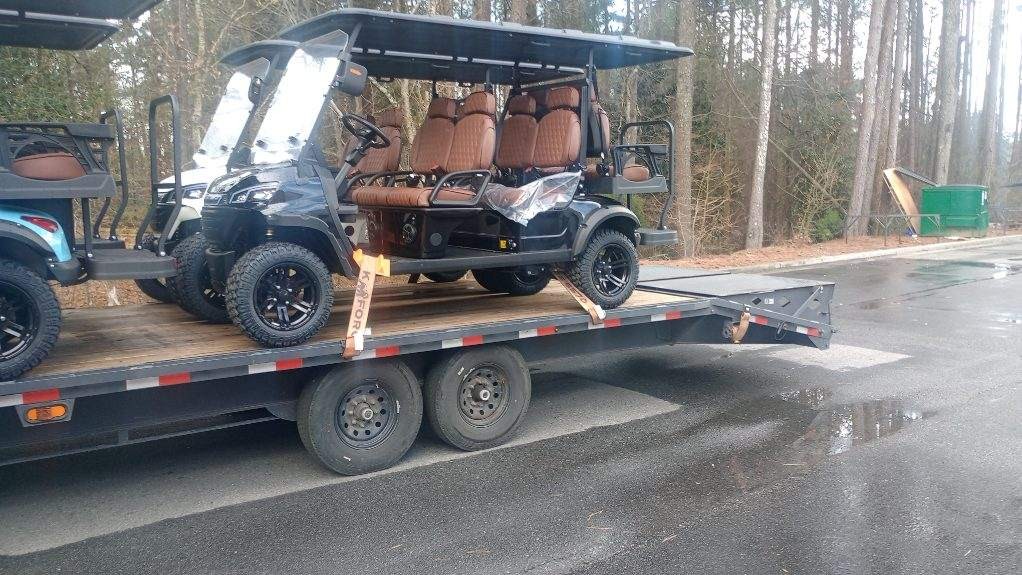
Use a cross-tie method for maximum stability, forming an “X” pattern with the straps to secure from multiple angles. Attach straps to the golf cart’s frame or axles, not plastic parts or wheels directly unless using tire straps. Avoid over-tightening to prevent suspension damage, but ensure no slack.
- Secure the front: Attach two straps to the front axles or frame on both sides. Connect one to the trailer’s left front anchor and the other to the right front anchor, crossing them if possible.
- Secure the rear: Attach two straps to the rear axle or towing hook. Connect to the trailer’s rear corners, again crossing for an X formation.
- Use protective padding on the straps to prevent abrasions to the golf frame.
- Ratchet all straps tight: Pull until the golf cart is immobile, checking for movement by rocking it. Add safety chains crossing under the cart for redundancy.
- Final check: Walk around and inspect all connections. Drive a short distance and re-check tension, as straps can loosen initially.
Common Mistakes to Avoid
- Attaching to weak points like bumpers or seats.
- Straps overtightened.
- Straps being placed across plastic painted parts.
- Overloading the trailer beyond its capacity.
- Not re-checking straps after the first few miles.
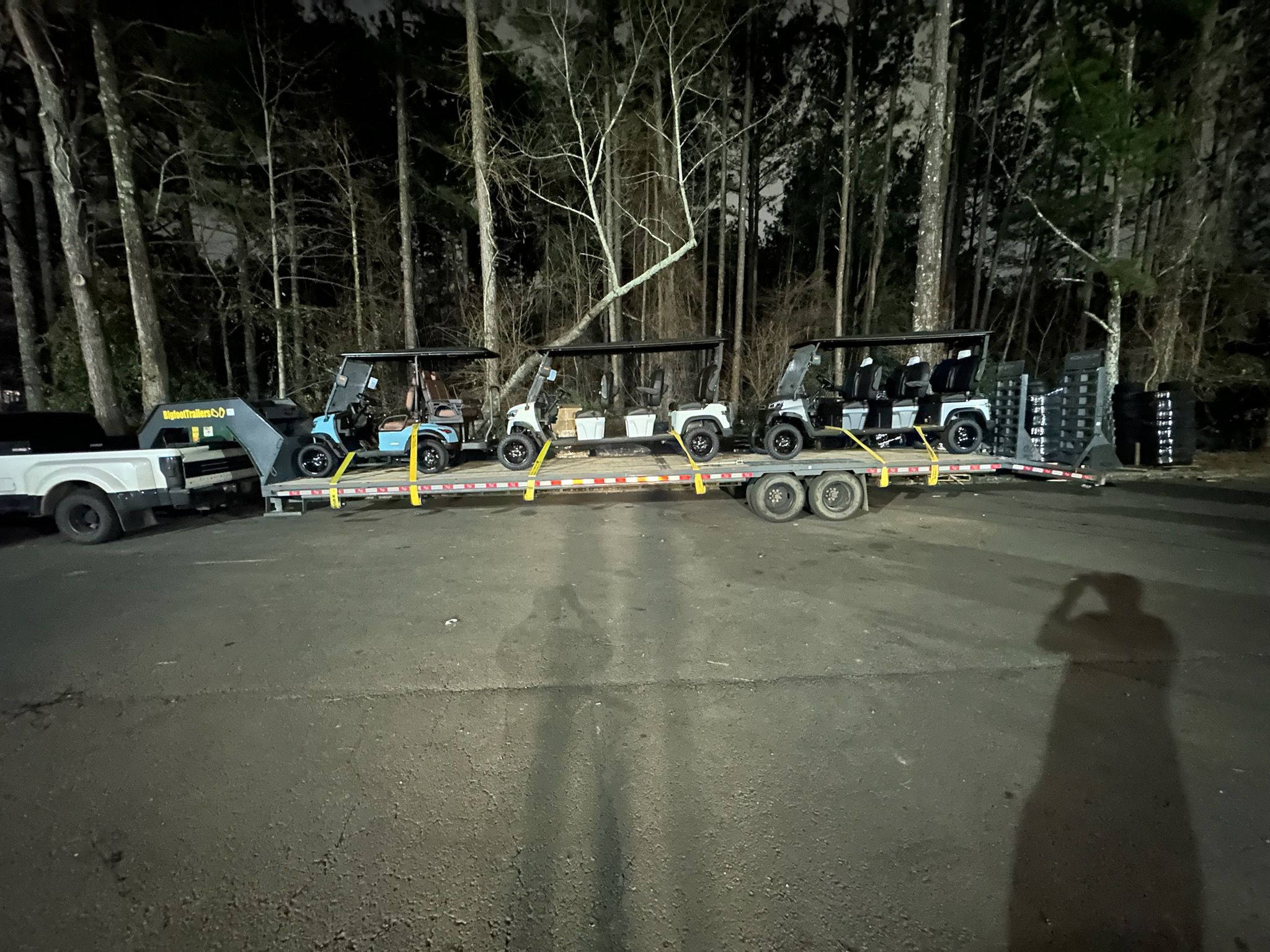
Improper Strapping
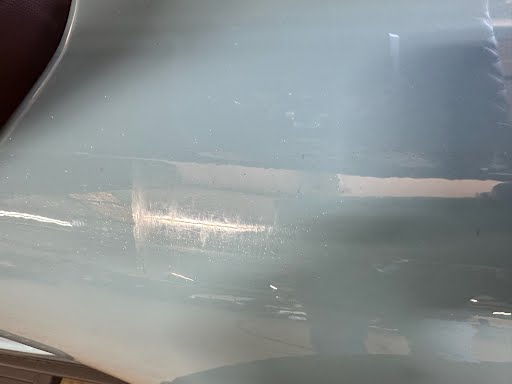
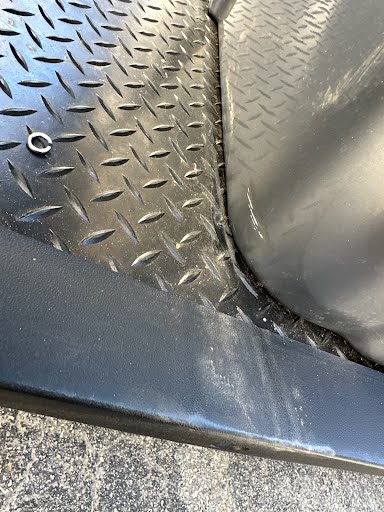
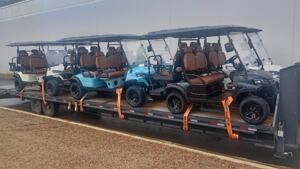
Below is a photo of improper strapping. The first cart has a strap over the blue painted plastic part of the golf cart. It also had an issue with the strap moving during transport from not being tightened correctly. The last golf cart has both straps in the wrong position. Due to this method of loading damage did occur.